The joy of printing in a digital world
Holding a printed photobook creates a sensory connection that no screen can replicate.
By the Studio5 min read
We take more photos than any generation before us, and we look at fewer of them. They live in a feed that never ends, in clouds we rarely open, on phones we replace every few years. Printing feels almost old-fashioned. And yet, every time a printed book arrives, something happens that no screen has managed to replace.
Paper slows us down
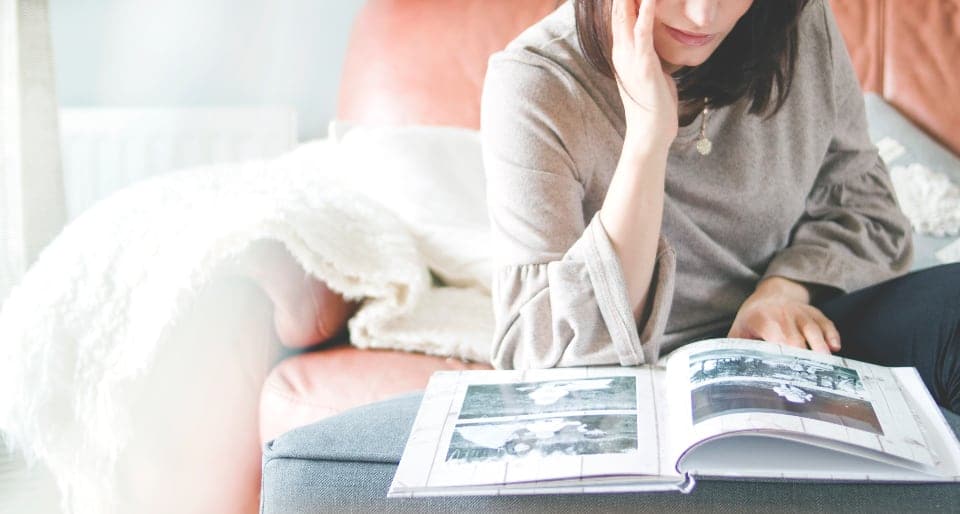
A screen invites scrolling. Paper invites stopping. When you hold a book, you look at each page for as long as you like, and nothing pushes you to the next one. You notice details: a hand on a shoulder, a crumpled napkin, a face in the background you had forgotten. Printed photos give moments the time they deserve.
A book is a shared object
Phones are personal. Passing one around feels awkward, and someone always swipes too far. A book on a table is for everyone. Grandparents, children and visitors can all lean in together. People point, tell stories, interrupt each other and laugh. A printed photobook turns looking at photos into a social act again.
Print is honest about time
Digital photos look as new on the day they are taken as they will in twenty years. A printed book ages with you. The spine softens, corners round, a page falls open at the favourite spread. Those marks become part of the memory, a record of how often a moment was revisited.
Printing is a decision
Choosing photos to print means deciding what matters. That act of choosing, of saying these moments are worth keeping, is valuable in itself. It turns a pile of images into a story and forces us to reflect on what we have lived through.
Print survives technology
Formats change, accounts close, devices fail. A book needs no charger, no password and no update. It will open the same way for your grandchildren as it does for you. In a world of fragile digital archives, paper is remarkably reliable.
The pleasure of the object
There is real joy in the physical details: the weight of the book in your lap, the smell of new paper, the slight resistance of a heavy page, the sound of a cover closing. These are small pleasures, but they are part of why people treasure printed books and rarely treasure folders.
Print a little, often
You do not need to print everything. Choose the moments that matter each year, and give them a home on paper. Over time, a small shelf of books becomes the most valuable thing in the house: the story of a family, told in the order it happened.